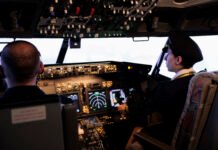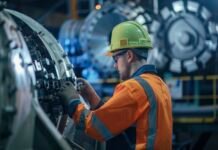

Every student of aviation has a moment. It normally occurs the first time they start seeing a real aircraft in detail–not in photographs, not in sketches, but in their midst. And all of a sudden, all that they have studied starts to seem different.
More real. More complex. More connected.
This is one of the most significant changes in aviation education, as it changes the conceptual understanding to a systemic one. Nor does it happen itself.
When Theory Meets Reality
Aircraft systems are commonly learned separately in the classroom. Engines, hydraulics-avionics–they receive training as an independent subject. This renders learning to be structured and manageable. In practice, though, these systems do not operate in vacuums. They are in constant contact with each other and affect one another in a not always conspicuous way.
This can be very challenging and exciting for students undertaking Aircraft Maintenance Engineering. It initiates the realm of more understanding, beyond text books. In this learning process, somewhere along the way, it stops being about memorizing; it becomes about interpreting.
And there the real growing starts.
The Importance of Real-life Experience
This gap can only be narrowed by something more than theoretical knowledge. It requires exposure- experience of systems on the job, experience of how parts interact, and experience of how engineers solve real problems. That is why such importance is given to the practical training.
Students in institutions such as the College of Aeronautical Engineering are in many instances, early inspired to work in the real world. Regardless of whether it is workshops, simulations or practical sessions, the emphasis is laid on application.
Knowing how to work a thing is not knowing how to manage it. This is very important in Aircraft Maintenance Engineering.
Thinking Like an Engineer
This is another change that occurs as students advance. They start to think in a different way.
Rather than posing the question, What is this system? they begin to ask, “What happens in this system when some conditions are present? or “What could go wrong here?” This change of mind is what constitutes professional preparedness.
It is not a matter of having the answers, it is a matter of knowing how to go about a problem.
This attitude is critical in a career as an Aircraft Maintenance Engineer. Engineers should be able to analyze and interpret situations and make decisions that conform to the levels of safety.
And this skill cannot be gained in a day. It develops by experience, observation and by constant learning.
Why This Transition Matters
As a student, you can identify this learning gap at an early stage, which can make the process easier. It gives them the freedom to study, but not merely. It promotes inquisitiveness, practical involvement and desire to learn beyond the syllabus.
Finally, it is the process of classroom training to a real-life one that makes a good maintenance engineer. It is in it that knowledge is made skill, and theory is made action.
Aviation can be a career, a very ongoing learning, adapting and growing process, to those who will choose to take this transition.